Green Footprint
3 June 2026
The Workplace of the Future: art made from recycled plastic for Omrin
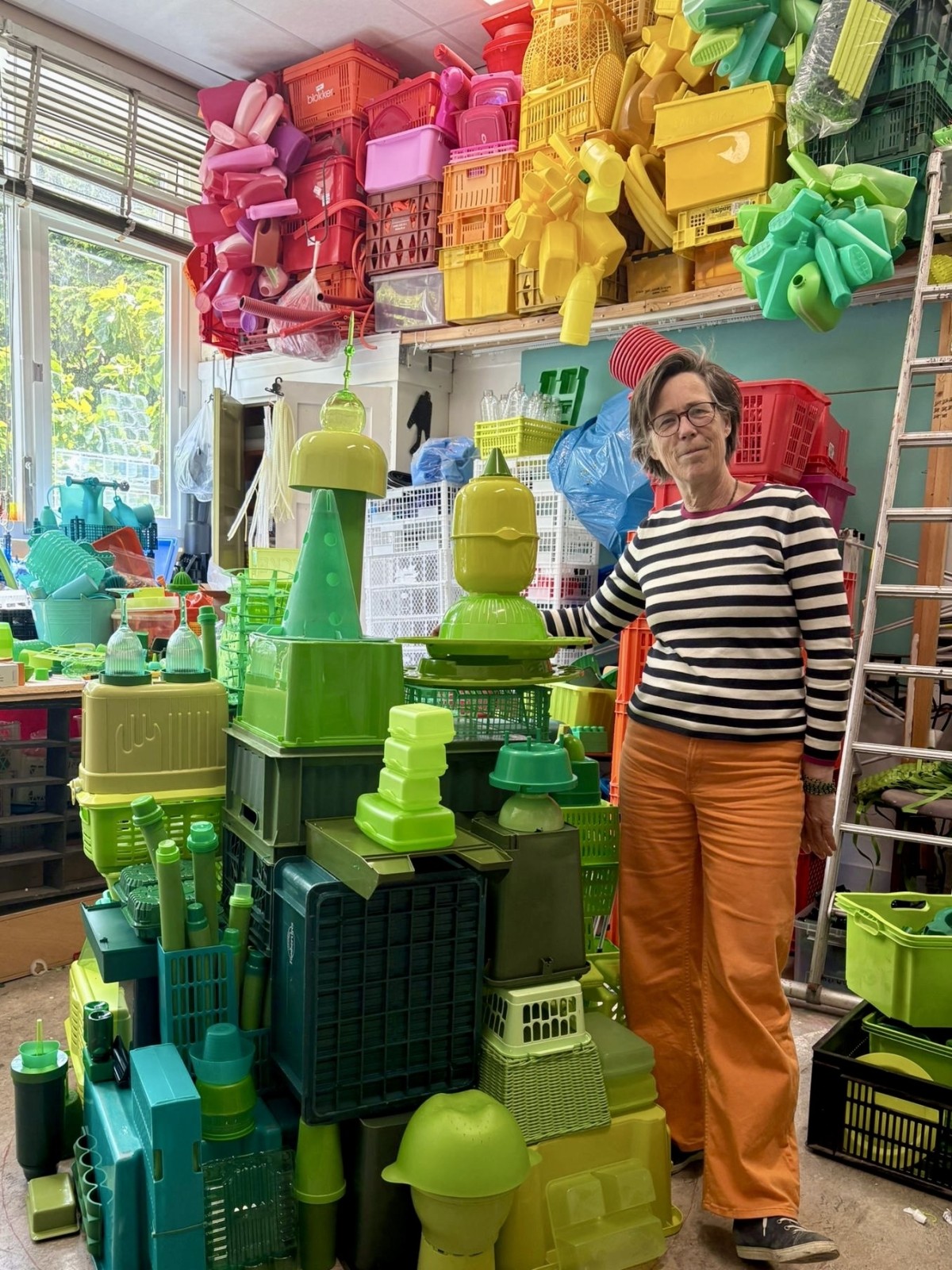
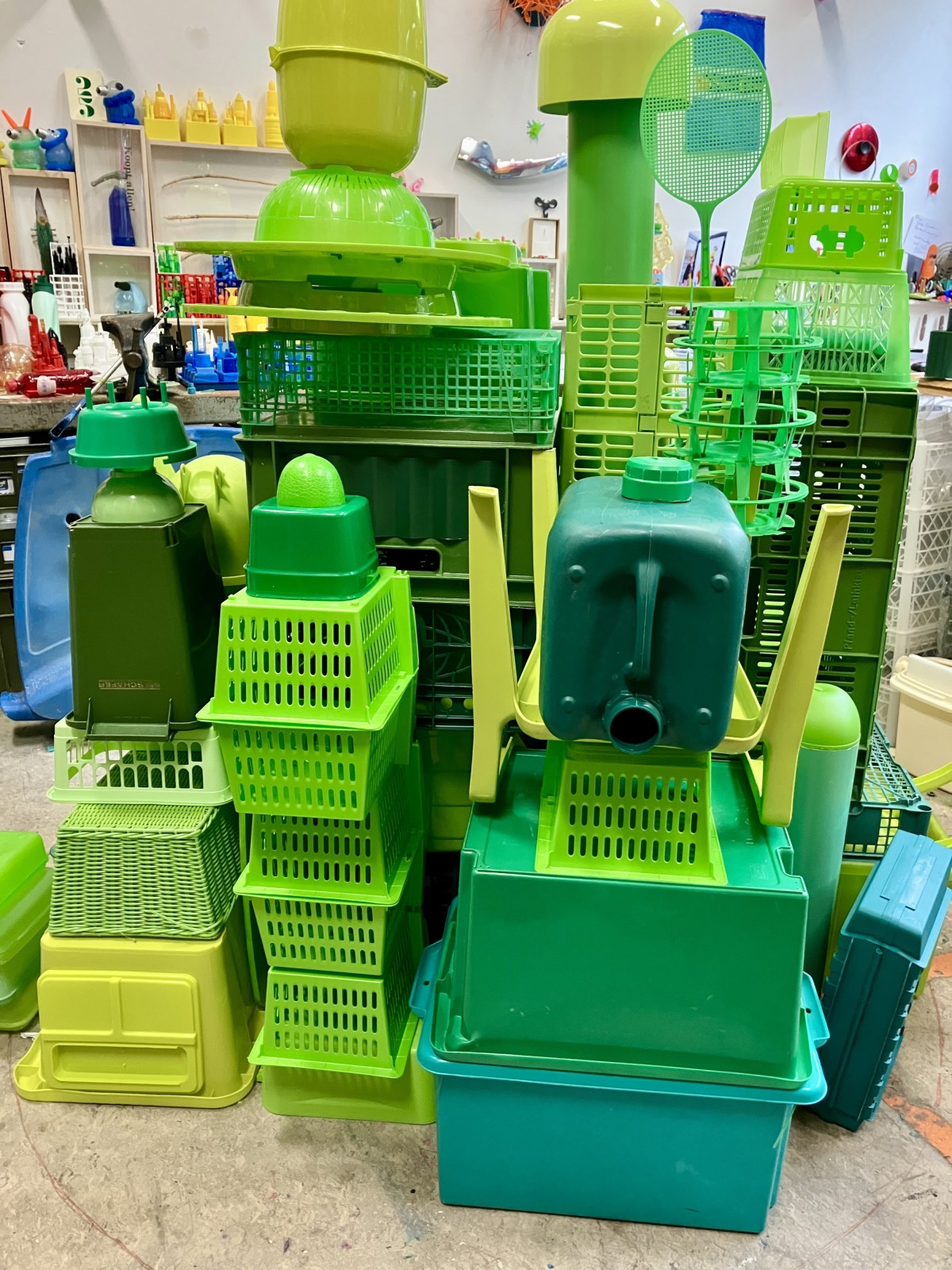
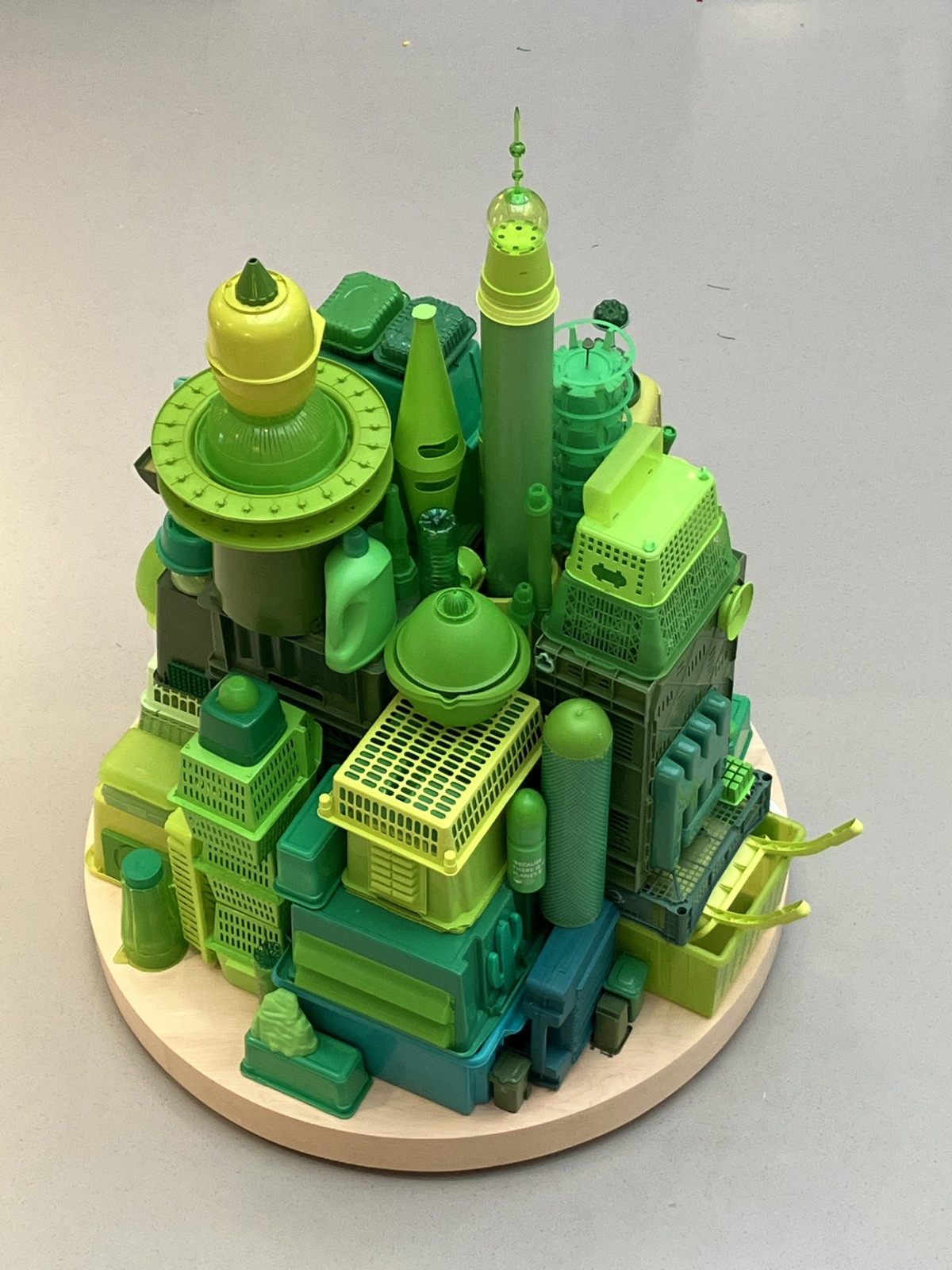
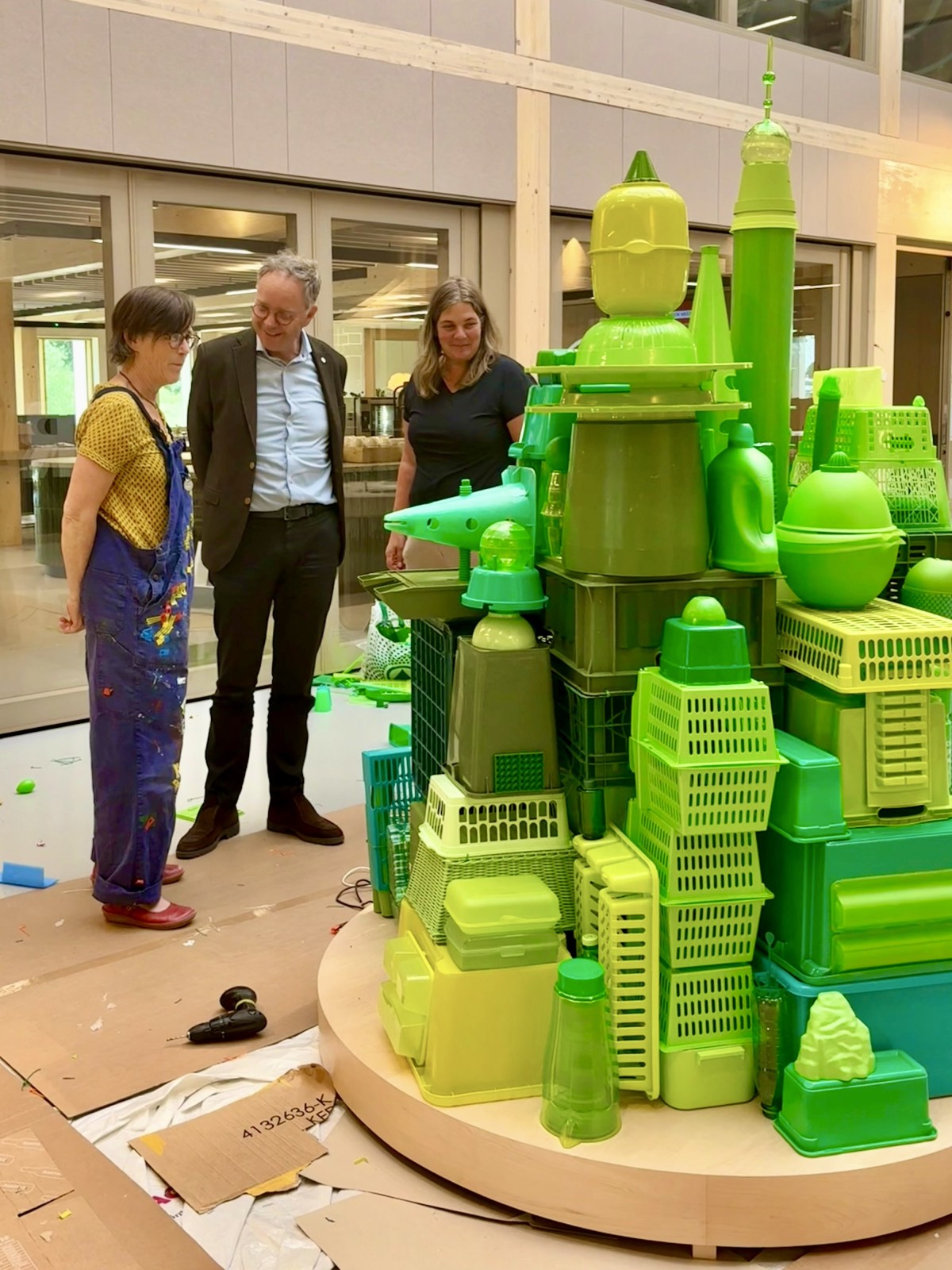
Commissioned by Omrin, I created a work of art from green plastic waste for Omrin’s new office in Heerenveen: ‘Work Landscape of the Future’.
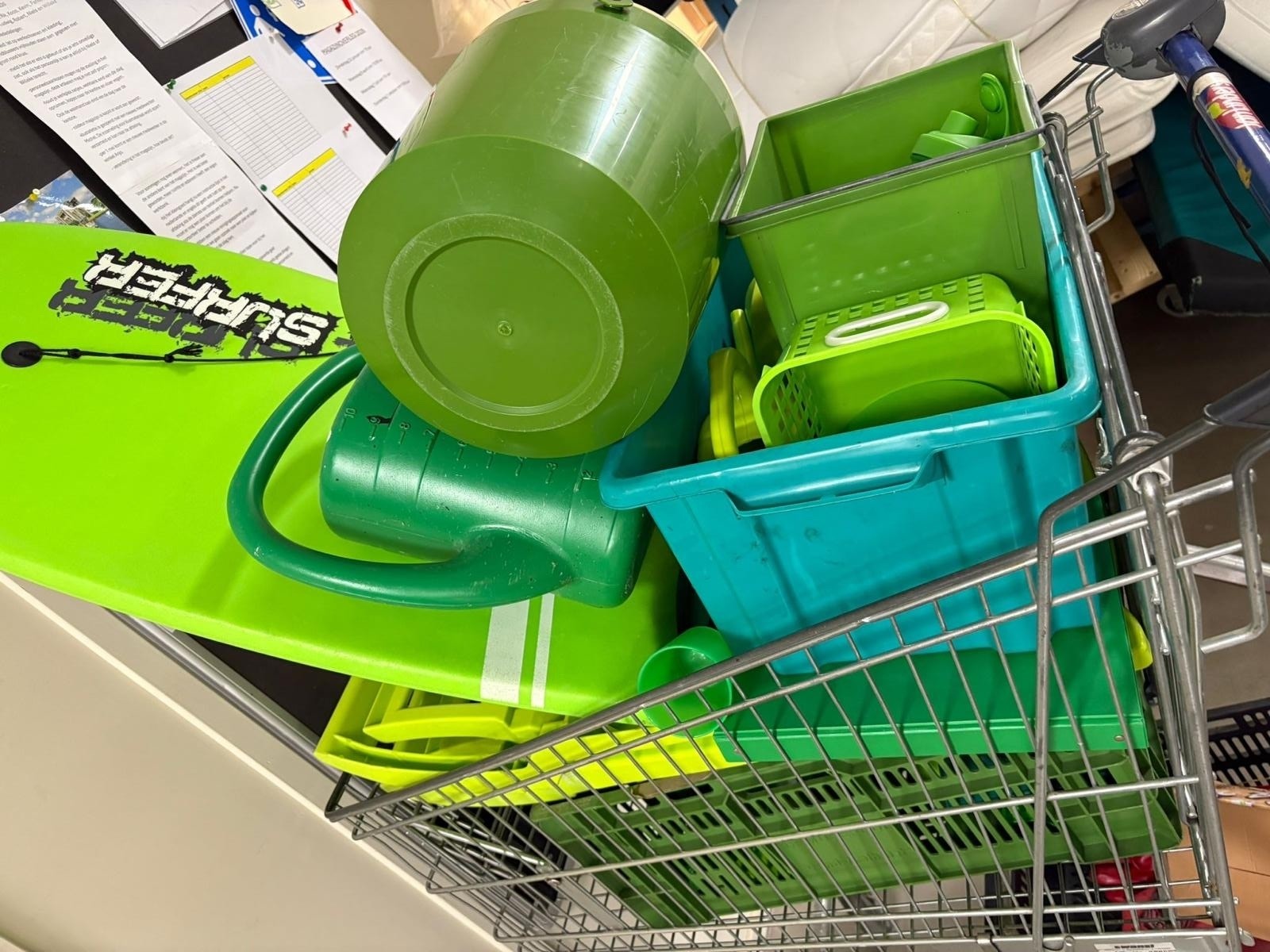
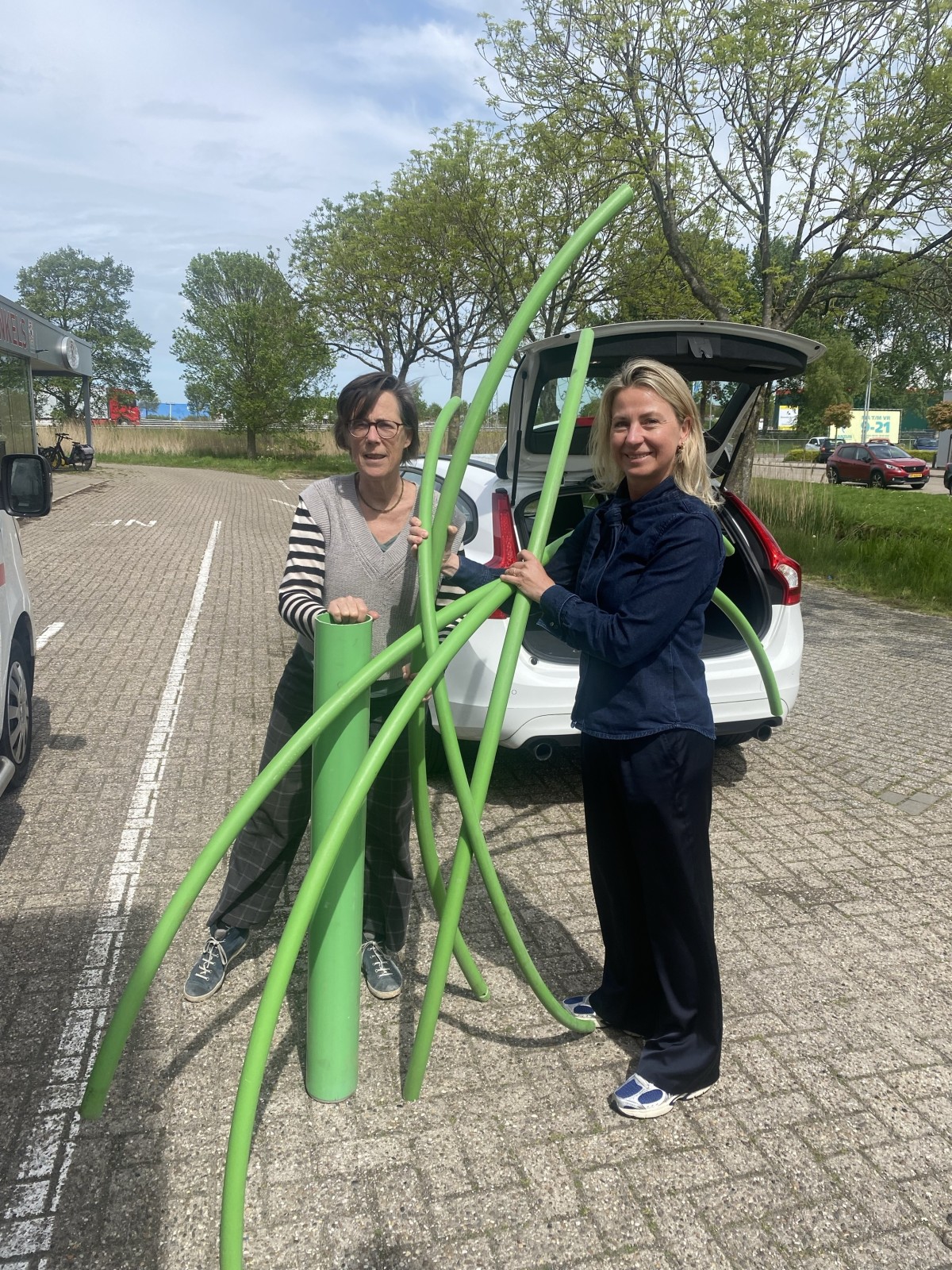
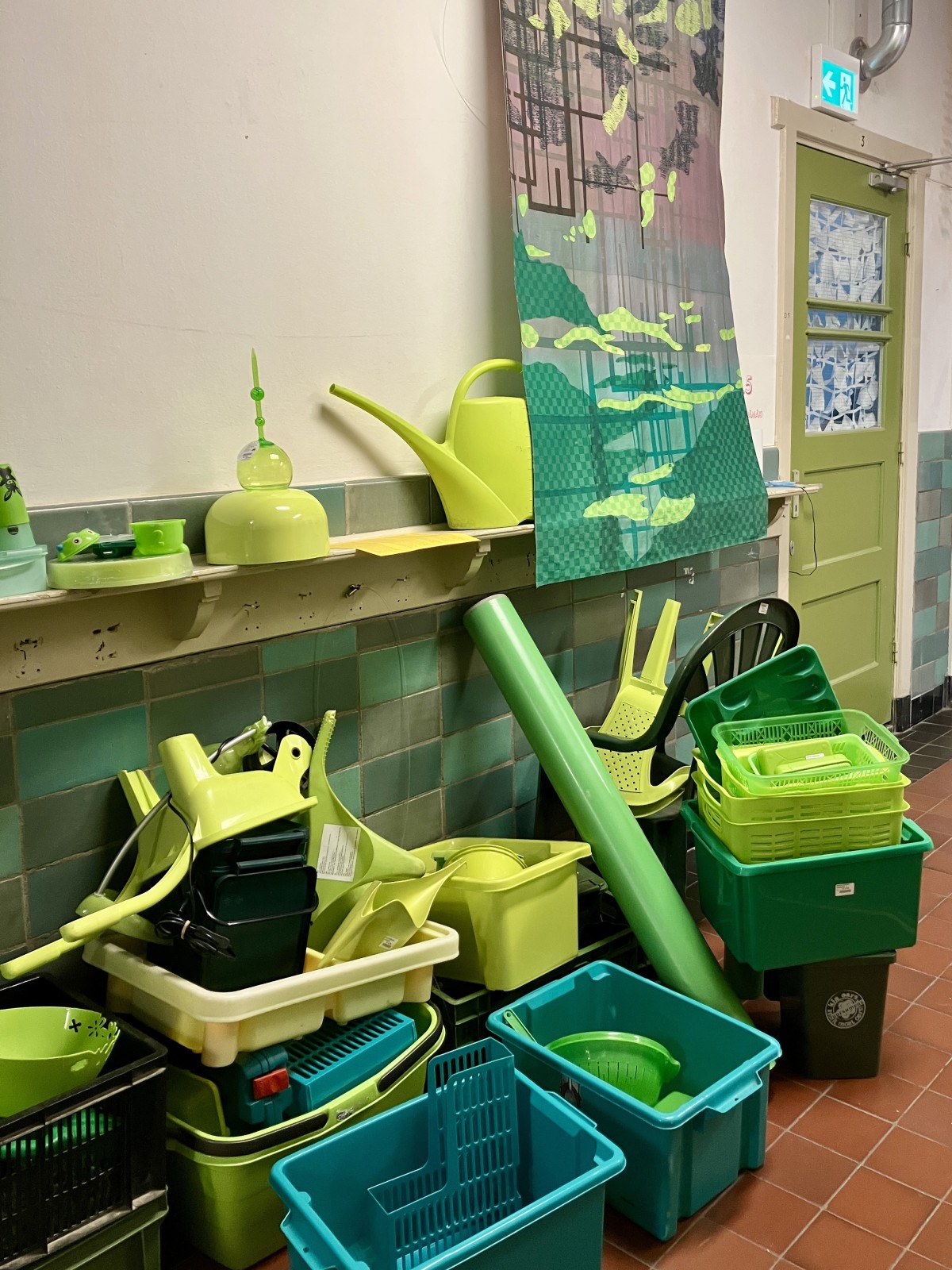
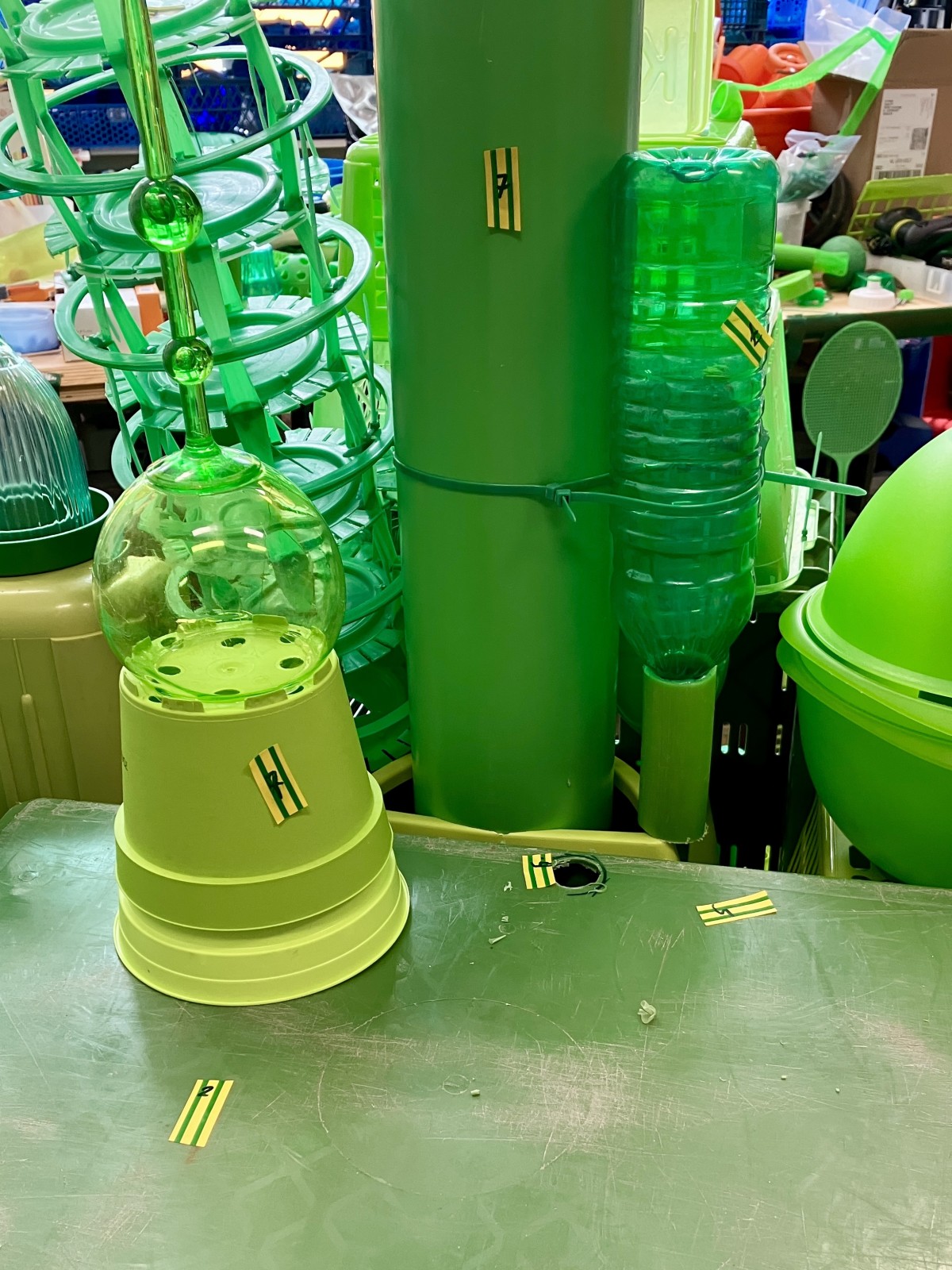
As with all my works, the process begins with gathering materials. In this case, it involved green plastic waste sourced through the Estafette recycling shops. I collected an initial batch in Sneek, supplemented with construction waste from the new office. I was also able to use plastic waste from my own studio stock, where there is always a collection of waste waiting to be given a new purpose.
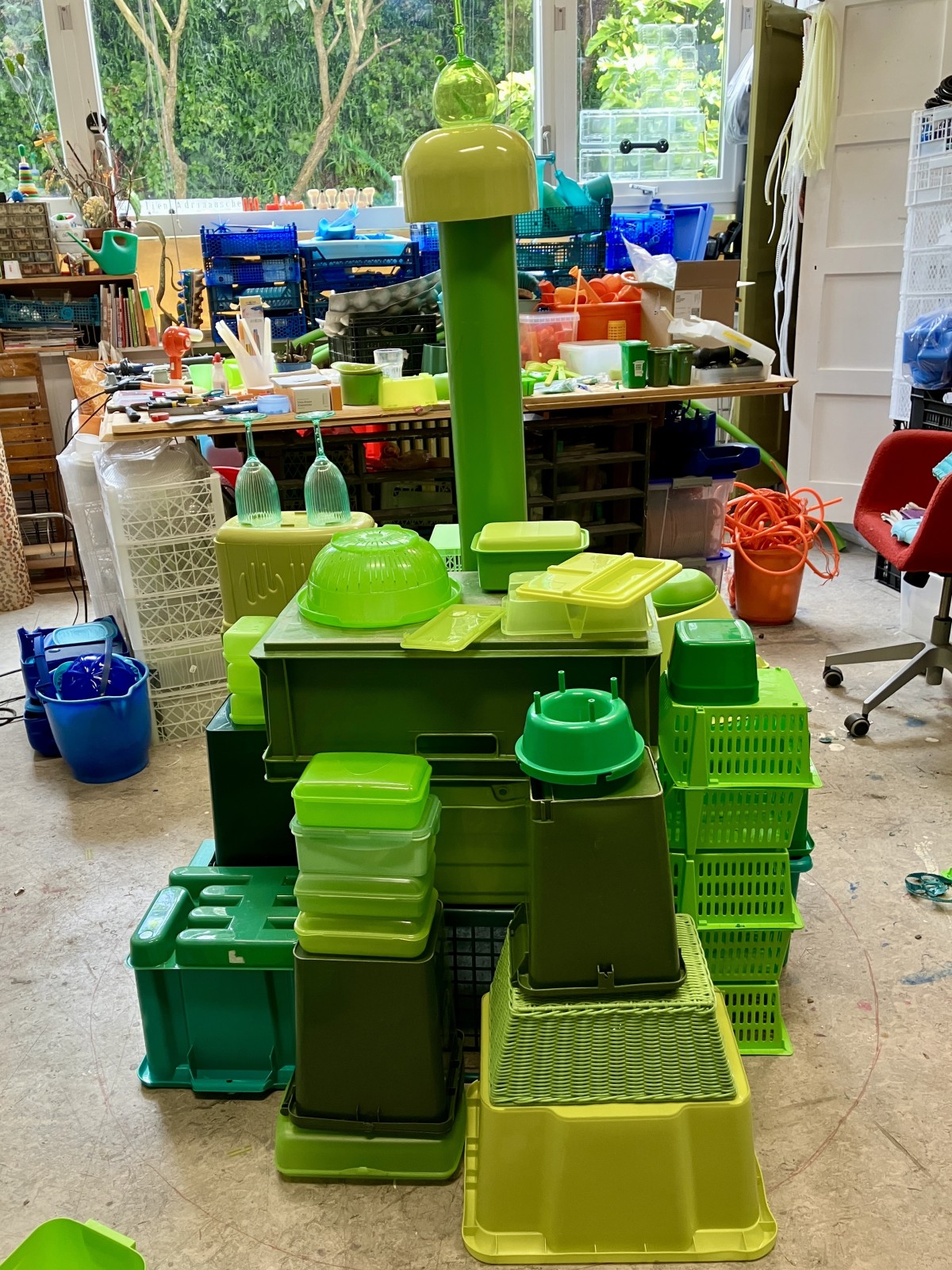
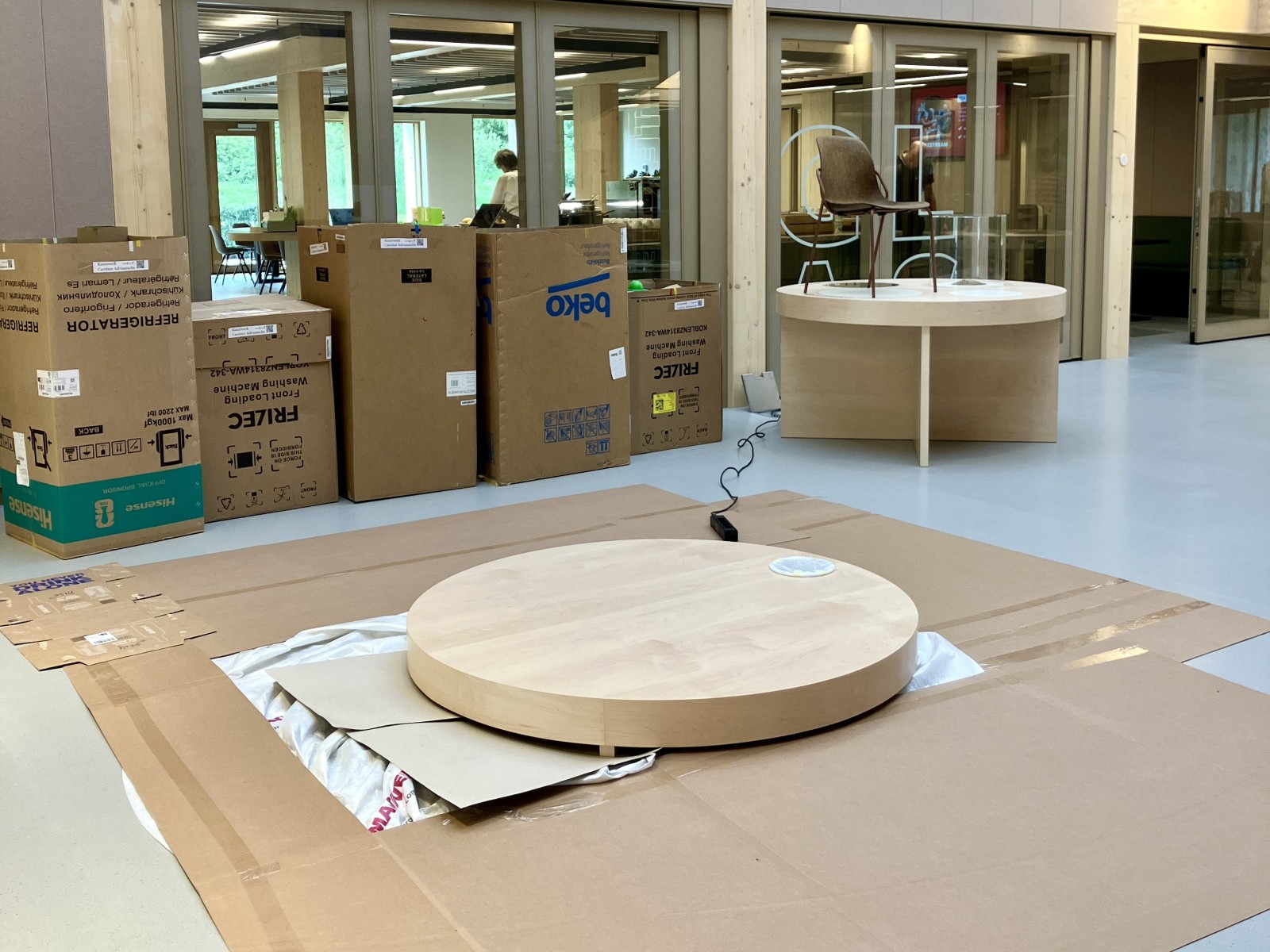
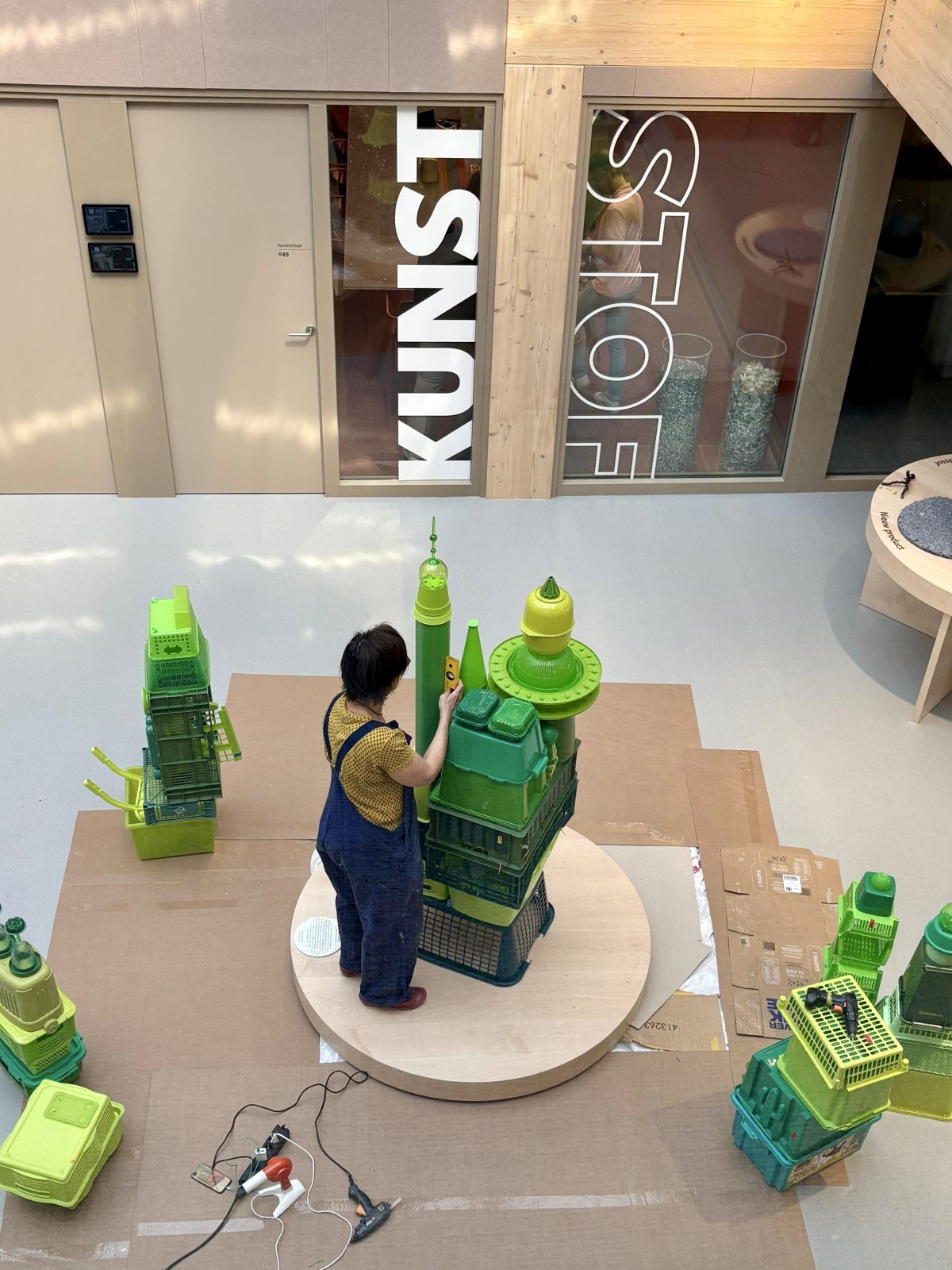
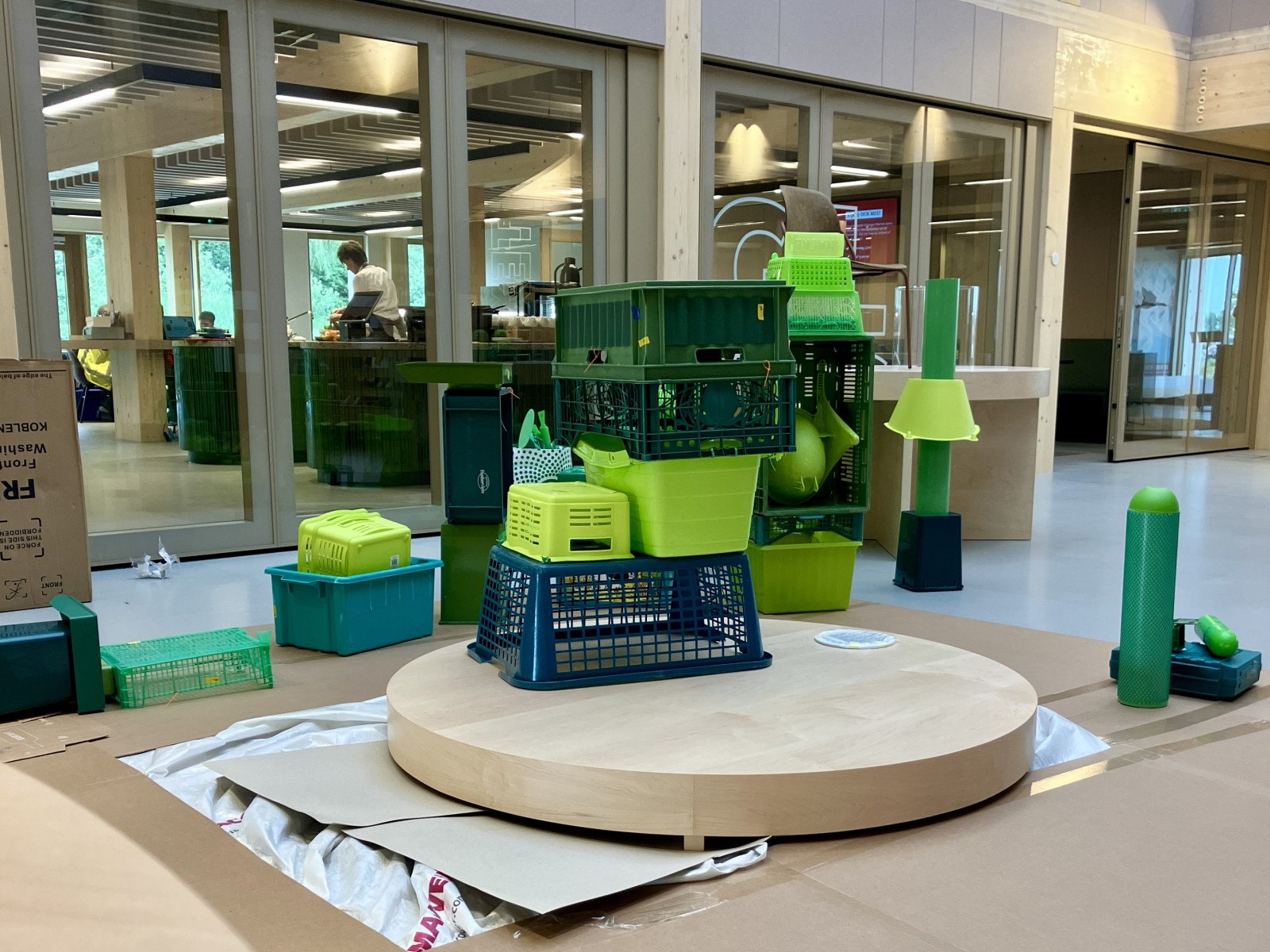
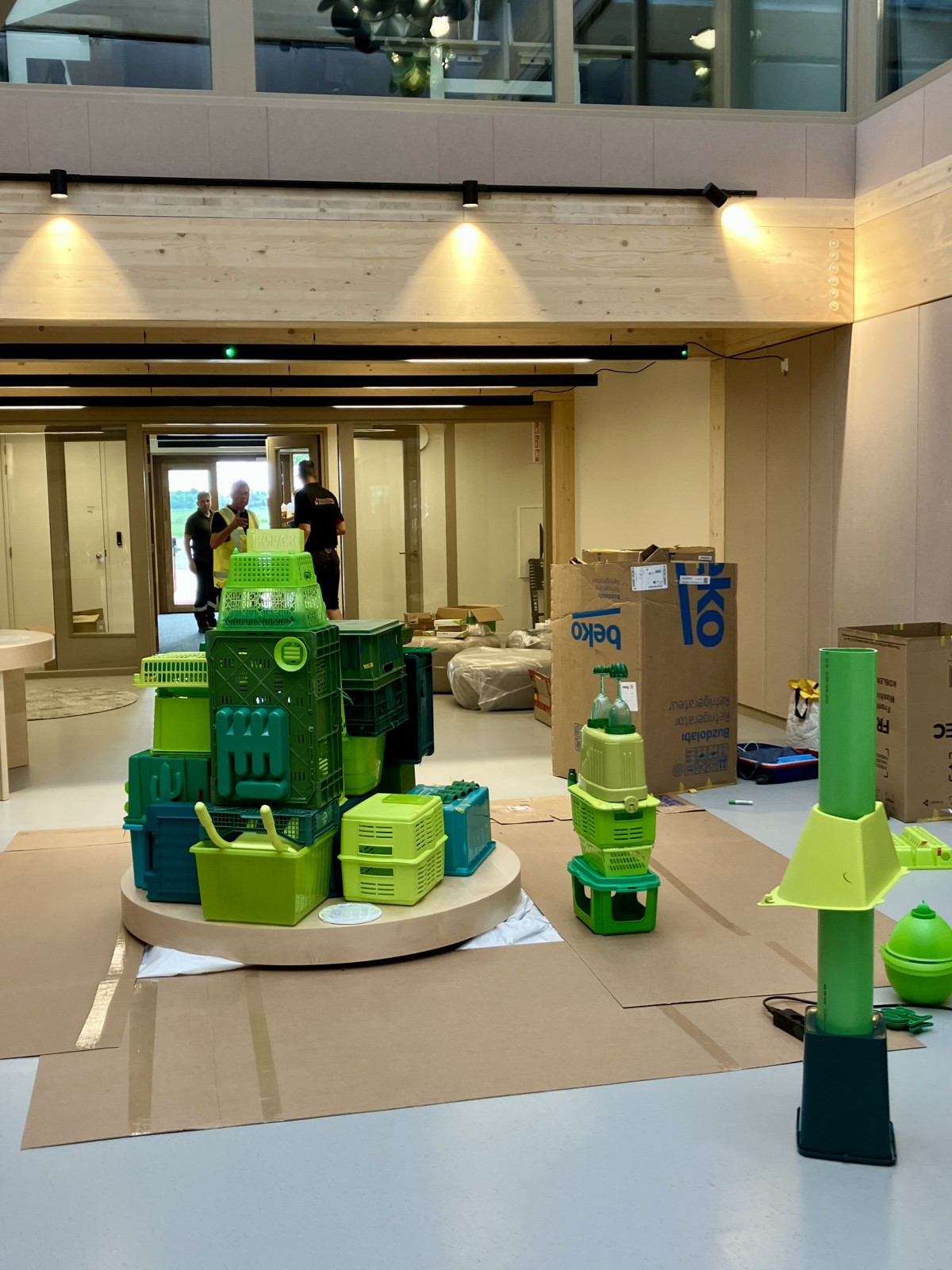
On the floor of my studio, I drew a circle with a diameter of 150 centimetres. From that moment on, the building could begin. The process is very much like playing with LEGO and, at the same time, putting together a giant jigsaw puzzle. The different shapes must stack well together; round and square elements alternate, as do open and closed shapes. The different shades of green also play an important role. By carefully coordinating these elements, a sense of cohesion and rhythm is created in the work.
Initially, the artwork stood approximately 1.5 metres tall. Later, I received a further batch of green plastic from Friesland, which meant the work eventually reached a height of around two metres.
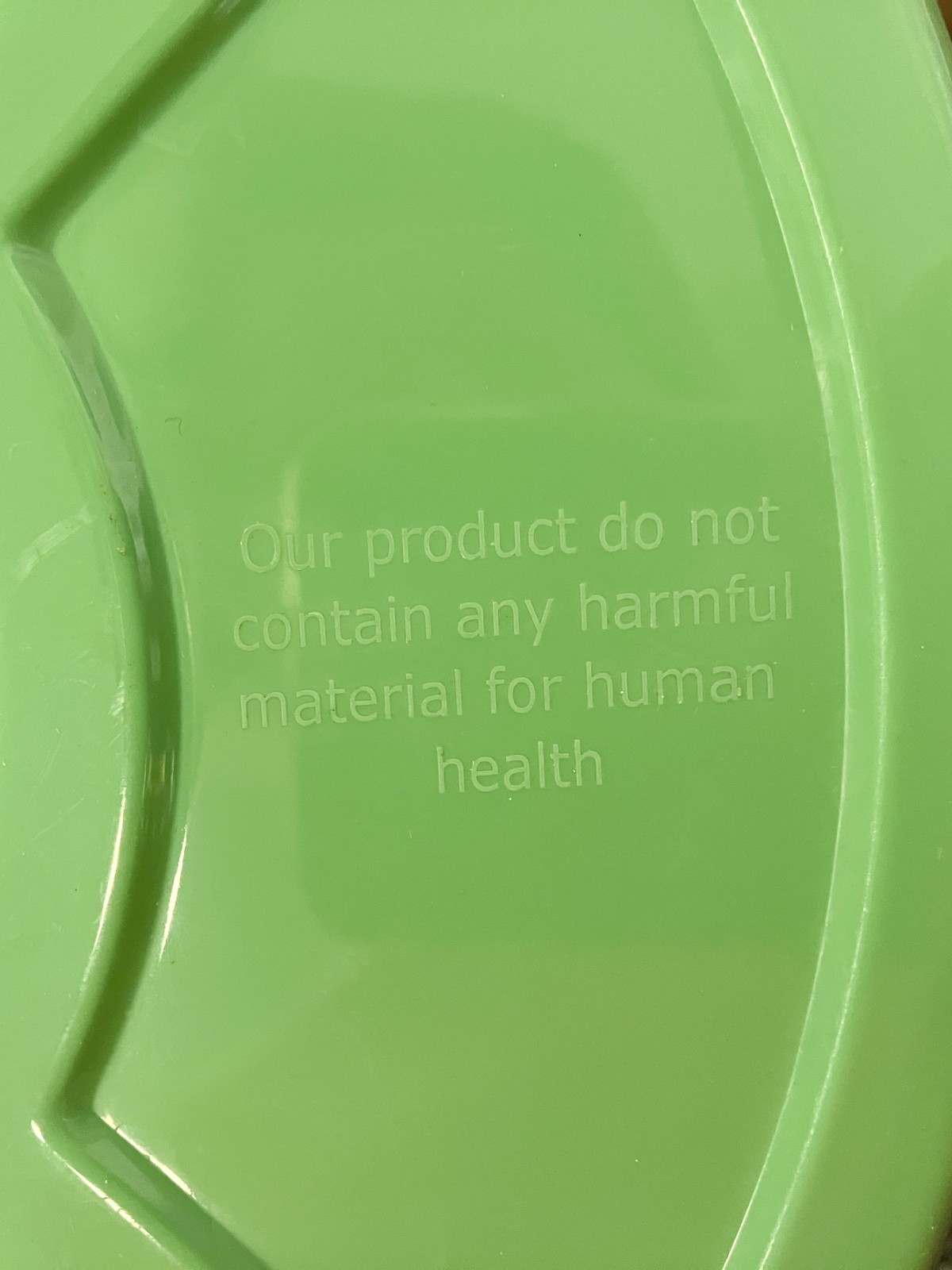
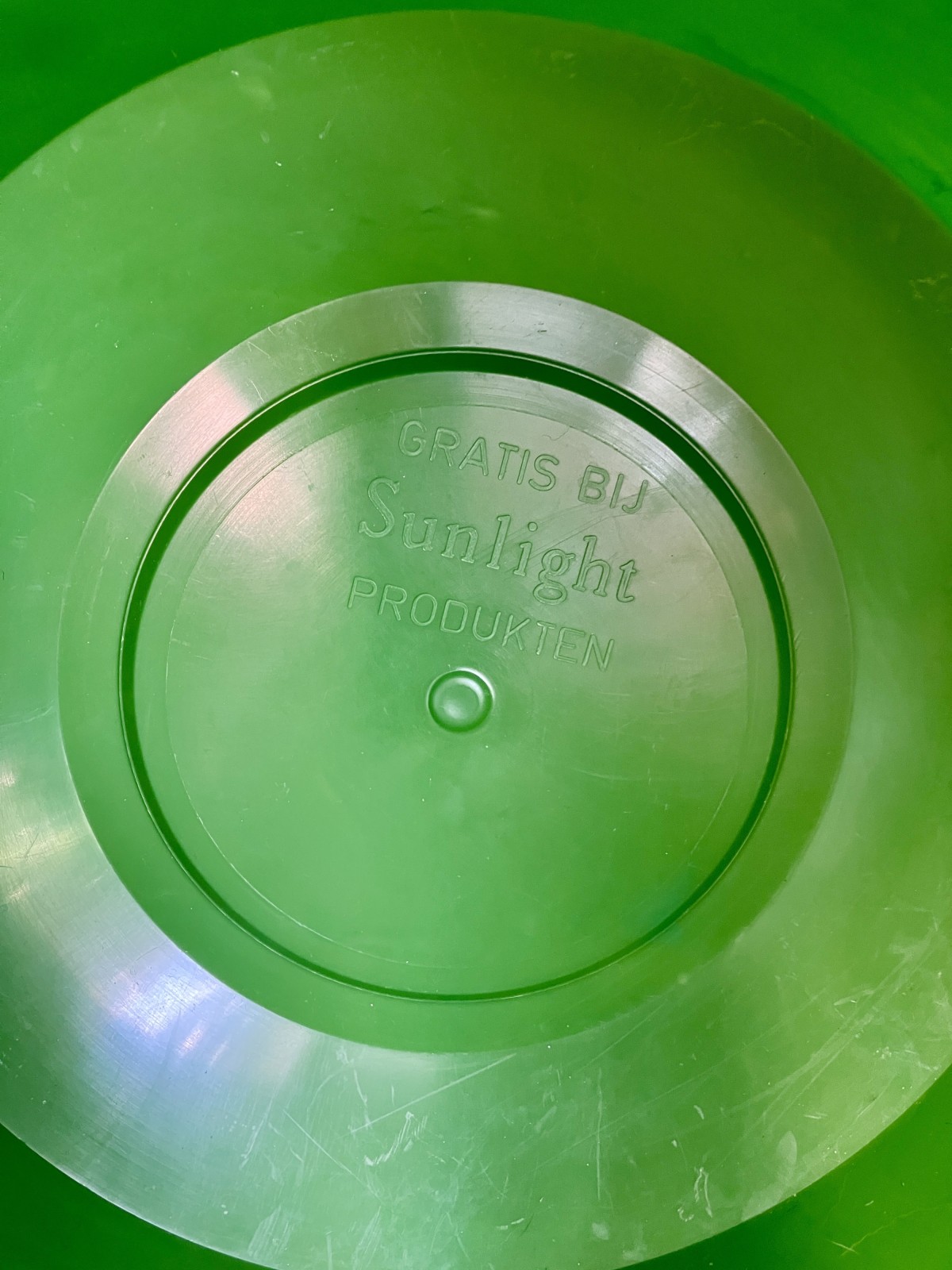
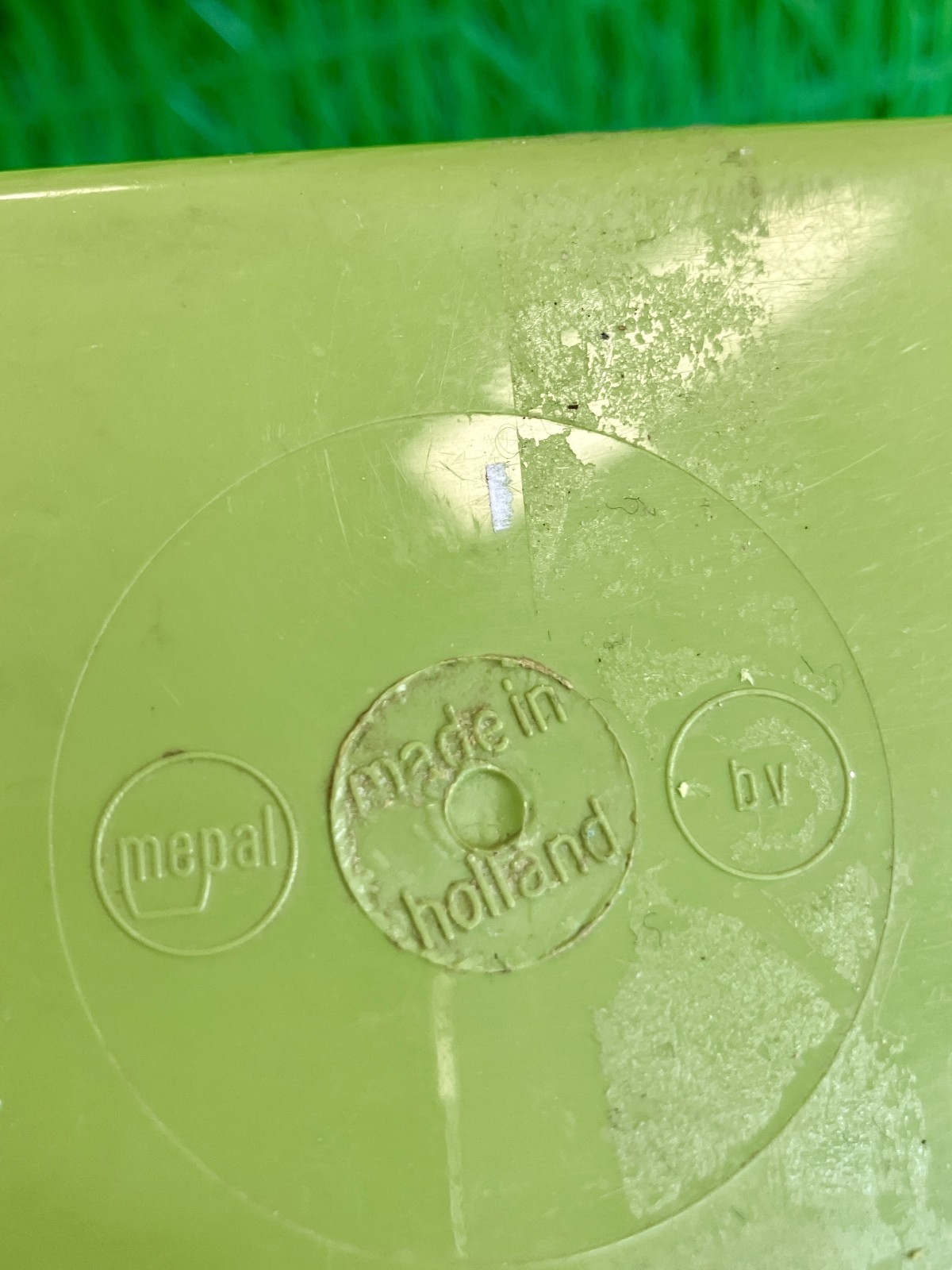
Whilst building, all the pieces of plastic literally pass through my hands. That makes it interesting to discover traces of their previous lives. Many parts feature embossed text, such as the type of plastic — recognisable by the familiar recycling triangle with a number — and the country of manufacture. Sometimes I also come across surprising objects from my own stash. For example, I’ve used old packaging from meat substitutes, which, just a few years ago, were still made of green plastic. Nowadays, this packaging is usually transparent, as this is better suited to the recycling process.
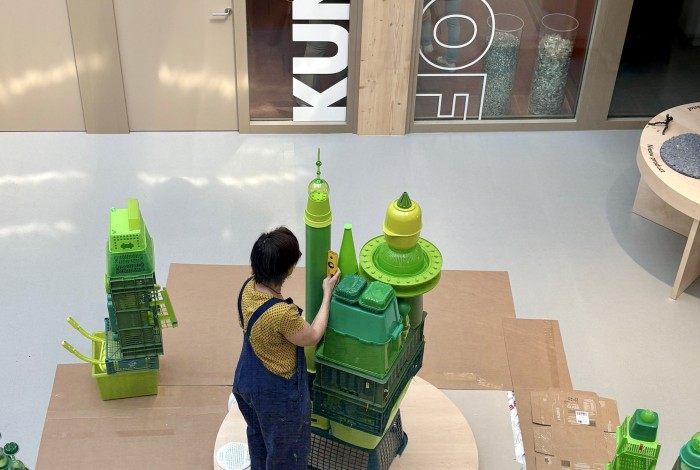
Whilst building, I stack all the parts loosely on top of one another. This allows me to make changes as I go along and continue to refine the composition. It is only in the final stage that I permanently secure the parts using cable ties or glue.
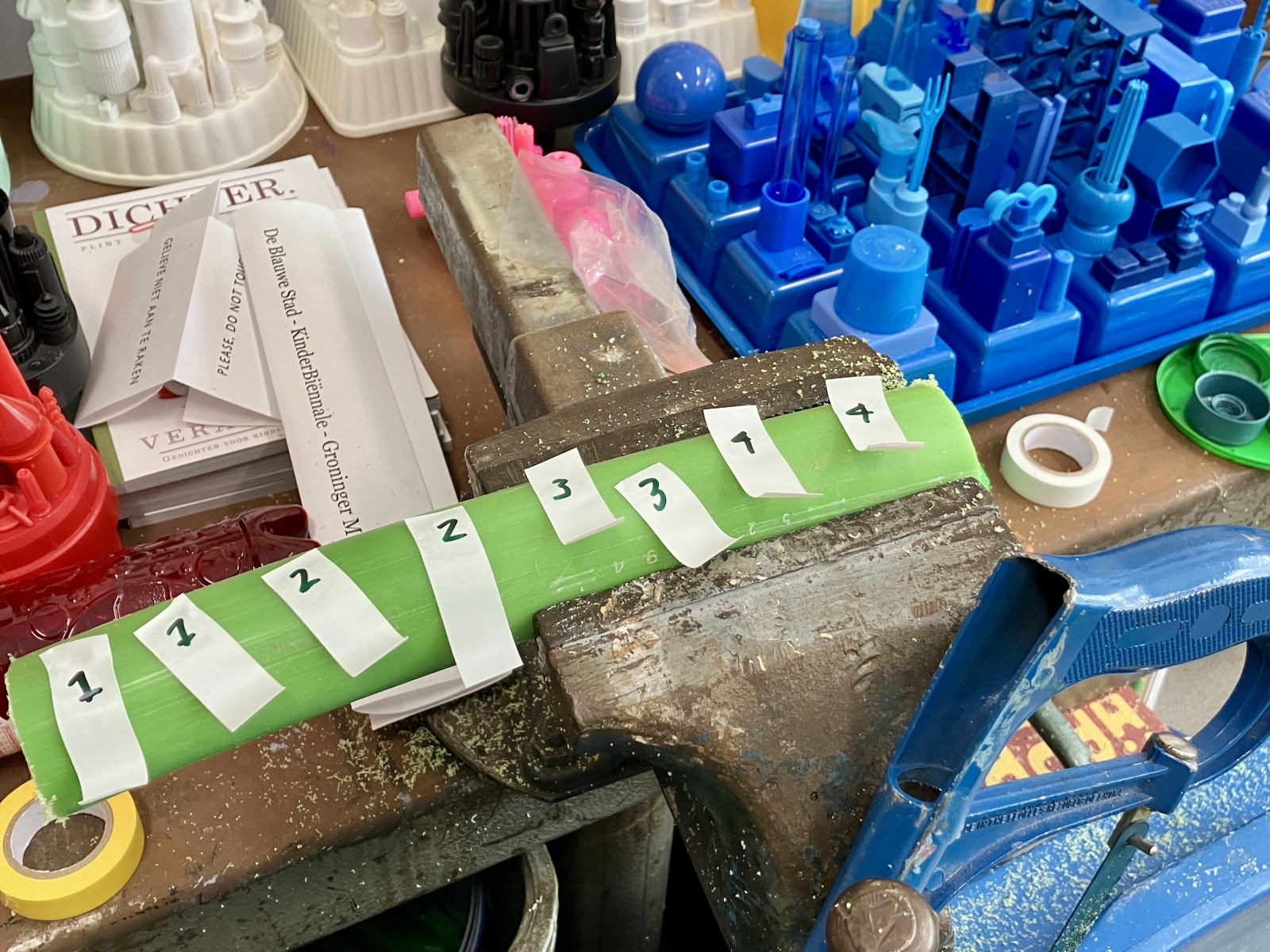
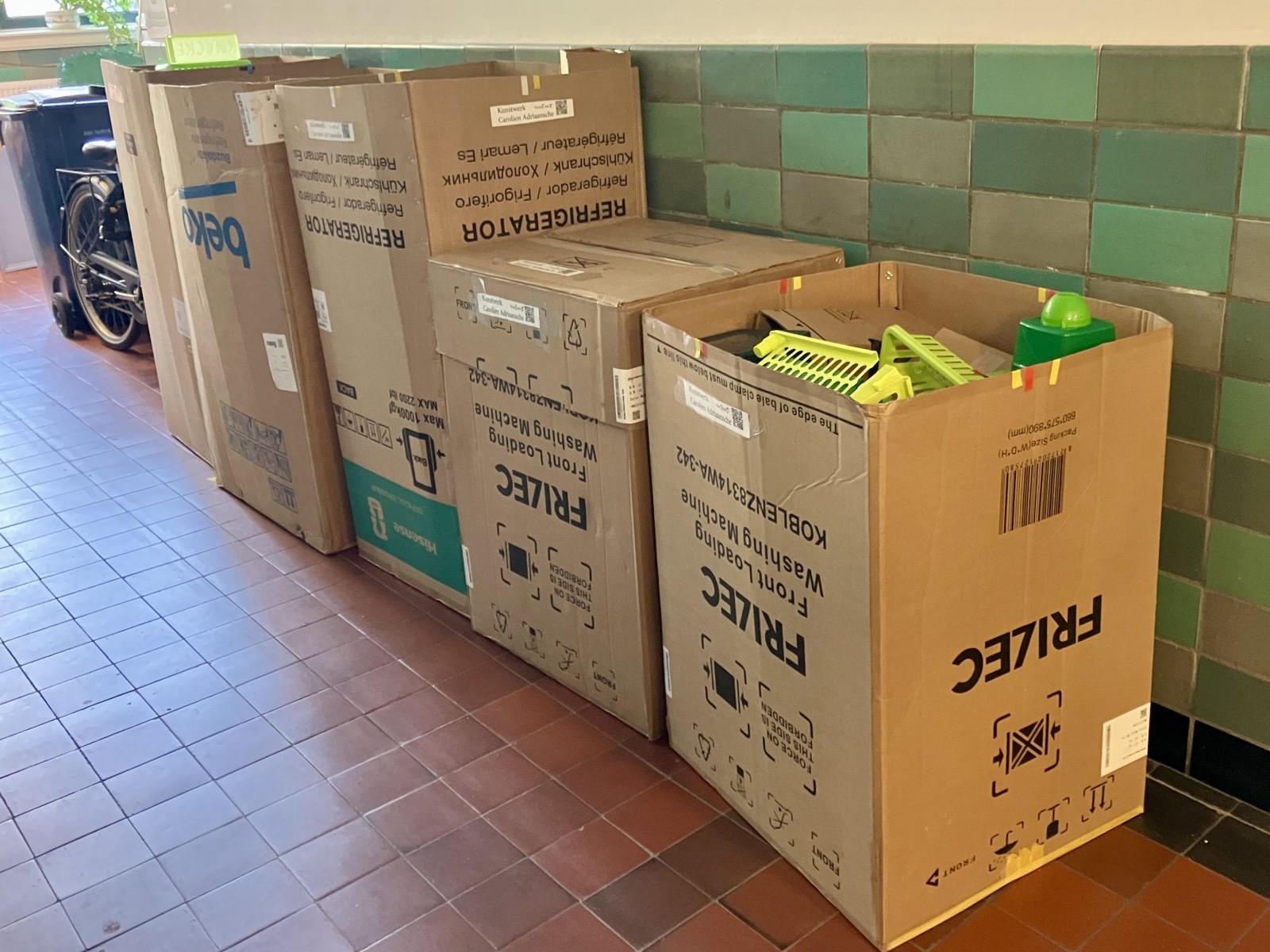
For transport, I use old washing machine and fridge boxes. The artwork is therefore constructed from separate modules that are reassembled on site. All parts are marked with coloured tape and numbered. For this project, I worked with five colours, corresponding to the different sides and the central section of the object. I also take lots of photos during dismantling, particularly of the points where parts slot together. This makes it possible to reconstruct the structure accurately.
Assembling the artwork on site is always a time-consuming task, but this time everything went smoothly and the artwork was in place within a single day.
I am extremely pleased with the end result. The work demonstrates how discarded materials can be transformed into a new form, bringing together sustainability, reuse and imagination.
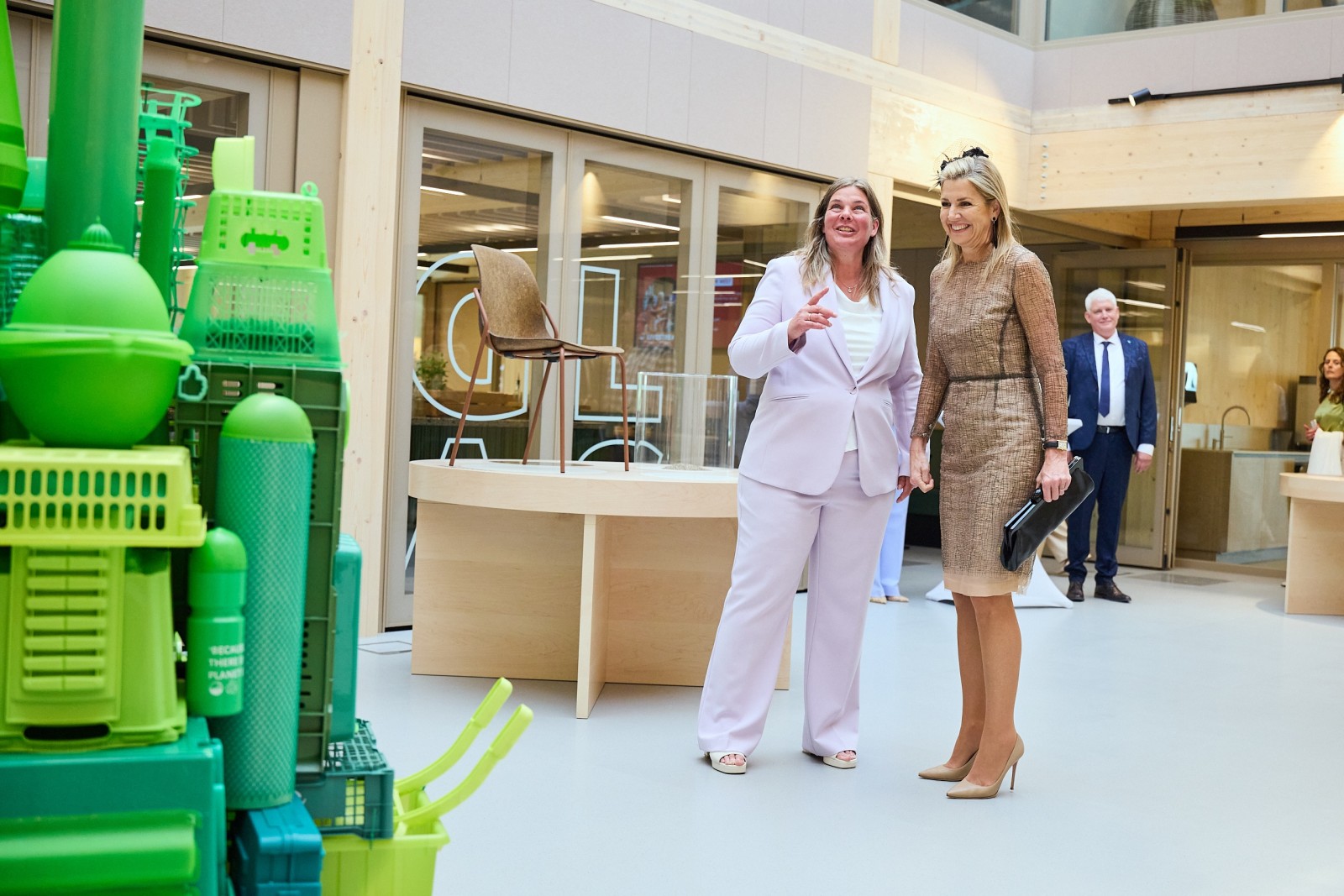
The official opening of Omrin’s ‘Landscape of the Future’ took place on 3 June and was performed by Queen Máxima.
Many thanks to Omrin – John Vernooij, Renate van Opzeeland and Marieke Baan
Studio Public – Koen Vorst
Photographs by myself and Omrin