About Carolien
My work starts with plastic waste, which is both a material and an indictment. For more than thirty years, I have been working as a visual artist with plastic as my main raw material. By transforming disposable material into seductive, aesthetic images, I expose a bitter tension: that between beauty and pollution, between aesthetics and ecological urgency, between our urge to consume and the growing ecological crisis. In my practice, plastic is not only a material, but also a subject, a symbol of consumer society and a mirror of our relationship with the world.
My work arises from intuition and curiosity. Collecting, selecting and combining plastic waste based on colour, shape and size is the starting point for every project. I am guided by chance finds: the material helps determine the direction of the work. Chance, play and research are central. These are processes in which I give space to the unexpected and trust in the meaning that emerges along the way.
For me, the aesthetics of plastic are ambivalent: seductive, shiny and colourful, but at the same time problematic and harmful. It is precisely this tension that I use to engage the audience. My work shows the seduction of waste and raises questions about value, reuse and responsibility.
My practice is both artistic research and social reflection. By reusing waste, I give shape to themes such as climate change, biodiversity, circular value and human overconsumption. The images attract attention because of their beauty, but their meaning is jarring. My art aims not only to seduce, but also to activate and raise awareness. It is an invitation to wonder and to confront the problems associated with the material.
Nature, biodiversity and transformation
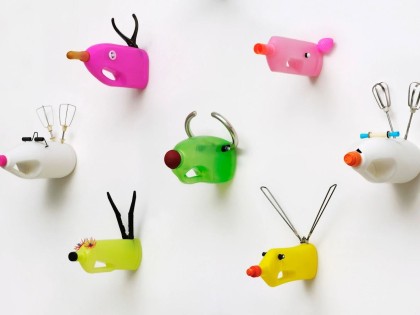
My fascination with nature, animals and natural history museums is an important source of inspiration in my work. I create my own “natural history collections”: objects made from plastic waste, presented in display cases and often given fictional Latin names. In doing so, I play with the visual language of science and museum presentation, while at the same time questioning what we preserve, classify and value. Plastic waste is transformed into new, imaginary life forms. An alternative biodiversity that is both poetic and confrontational.
Residencies and international projects tie in directly with this. In 2017, I was artist-in-residence in Aarhus (Denmark) as part of Aarhus European Capital of Culture. This is where Collection Aarhus C was created: a series of cabinets with a future biodiversity made from plastic waste that I collected on construction sites in the city centre, an urban archaeology of recent material.
In 2018, I realised the exhibition New Biodiversity at the National Museum of Natural History and Science in Lisbon. For this project, I collected plastic from the city and beaches. The installation was given a site-specific design in a former chemical laboratory, where nature, science and art met. Two works from this exhibition were included in the museum's permanent collection.
Monochrome installations and participatory projects
Another important strand in my work consists of large-scale, monochrome installations in which colour forms the connecting and organising principle. In 2013, I created my first monochrome assemblage for my solo exhibition Plastic Soup at CBK Emmen: a plant world constructed exclusively from green plastic waste. This also gave rise to a participatory approach, in which schoolchildren and visitors created their own plastic animals through workshops. It is an approach that I have regularly used since then to increase awareness and engagement.
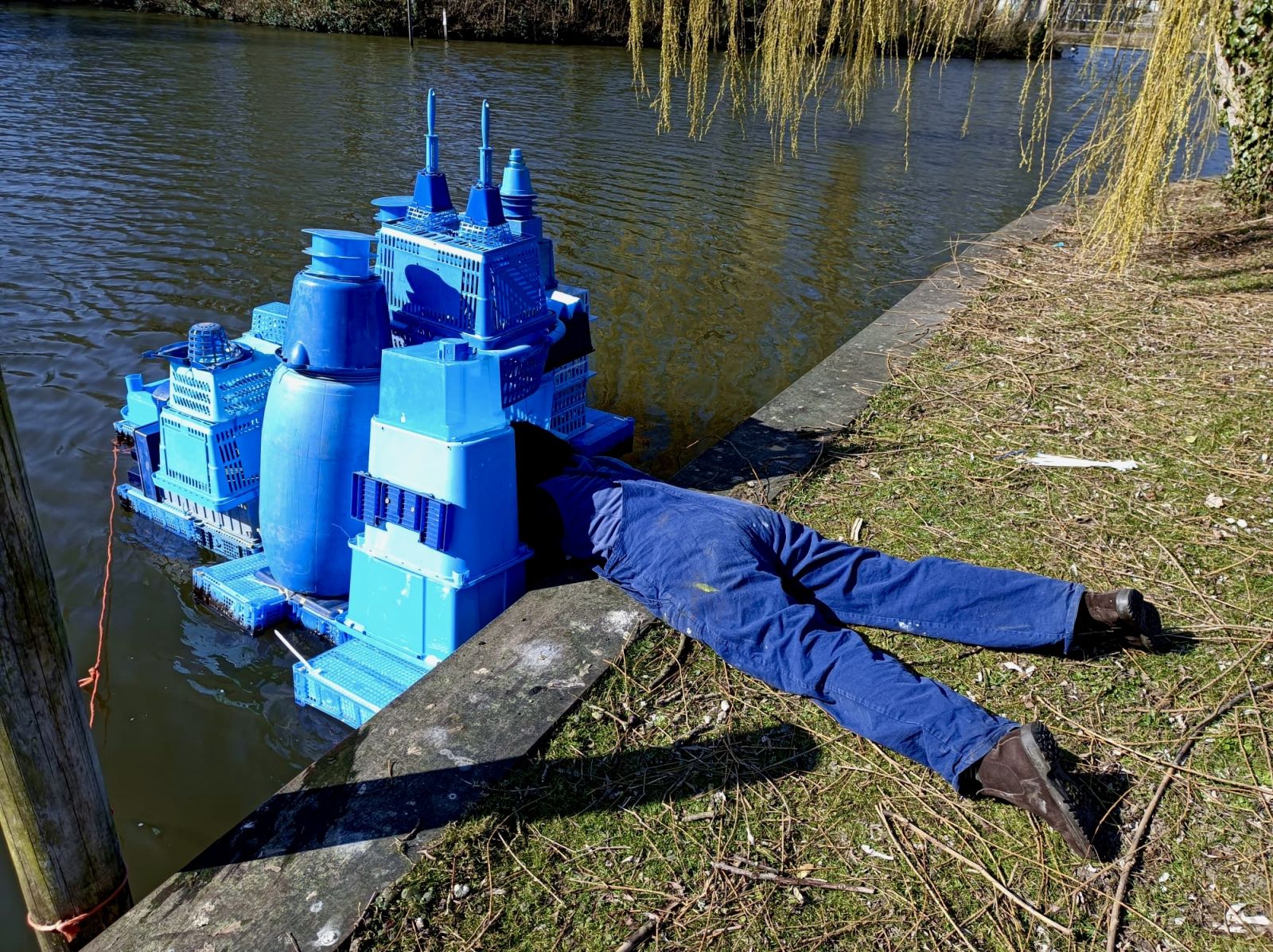
Between 2015 and 2022, under the title Floating Cities, I built various floating installations inspired by rising sea levels. These architectural structures, constructed from plastic waste, depict possible future living environments and balance between utopia and emergency scenarios.
In 2023–2024, I was commissioned by the Groninger Museum to create the room-filling installation De Blauwe Stad (The Blue City, 11 × 3 × 2 m) as part of the Children's Biennale A Better Place. This installation, constructed entirely from blue plastic waste, emphasises the value of circular working: the blue part of Floating Cities was given a second life in this installation.
picture: Genoeg, Rolph Cantrijn
You can also read more about me here:
Sorry only in Dutch
Summer Studio 2024
Leven Magazine 2024
Museum Tijdschrift 2024
Museum TV 2024
Schoon doen we gewoon (gemeente Den Haag) 2022
NRC 2021
Den Haag Centraal 2019
Cultuur en Ondernemen 2018
Cultuurpers 2017
Zooitje geregeld